TMS Therapy Side Effects: What to Expect Before Treatment in El Paso
Quick Summary
The most common TMS side effects are mild and short-lived, and they tend to ease as treatment goes on. Knowing what to expect, and how screening works, can make the decision to start feel clearer.
The most common TMS therapy side effects are scalp discomfort where the coil sits, tingling or twitching of facial muscles during stimulation, and mild headaches. They are usually short-lived and tend to ease as treatment goes on. TMS does not use anesthesia, it is not shock therapy, and you can drive yourself home after each session.
If you are weighing TMS because antidepressants have not brought enough relief, it is natural to want a clear picture of the risks before you commit to several weeks of daily visits. As a psychiatric practice offering TMS therapy in El Paso, we hear the same questions often: Will it hurt? Is it like ECT? Can it cause a seizure? This guide answers each one in plain language, using federal health sources and published safety research.
This article is educational and is not a substitute for a personalized psychiatric evaluation. If you are thinking about harming yourself or need immediate support, call or text 988 or visit the
988 Suicide & Crisis Lifeline, or go to the nearest emergency room.
What Are the Most Common Side Effects of TMS Therapy?
Most TMS side effects are mild, happen during or shortly after a session, and fade on their own. According to the National Institute of Mental Health (NIMH), the side effects of repetitive TMS include:
- Discomfort on the area of the head where the coil is placed
- Contraction or tingling of scalp, jaw, or face muscles during the procedure
- Mild headaches or brief lightheadedness
- Dizziness
NIMH describes repetitive TMS as safe and well tolerated overall. Headache was also the most common side effect reported in the clinical study behind the FDA's 2018 clearance of TMS for OCD.
Discomfort, when it happens, typically lessens as treatment progresses. If something feels too intense, tell your care team during the session. We monitor your comfort throughout treatment, and your provider can talk with you about what adjustments make sense for your plan.
Is TMS the Same as Shock Therapy?
No. TMS uses magnetic pulses aimed at one specific area of the brain, while electroconvulsive therapy (ECT), often called shock therapy, uses an electric current to deliberately cause seizure activity under general anesthesia. They are both brain stimulation treatments, but the experience is very different.
NIMH explains that the magnetic field TMS creates is about the same strength as an MRI scanner. It is switched on and off rapidly, which induces weak electrical currents in the targeted area. Because the stimulation is focused rather than generalized, TMS does not require anesthesia and can be done in an outpatient office.
| Category | TMS | ECT |
|---|---|---|
| How it works | Magnetic pulses targeted to one brain region | Electric current that causes brief seizure activity |
| Anesthesia | None; you stay awake and alert | Short-acting general anesthesia and a muscle relaxant |
| Typical schedule | Daily sessions, 5 days a week for 4 to 6 weeks | About 3 times a week, usually 6 to 12 treatments |
| Common side effects | Scalp discomfort, facial twitching, mild headache, lightheadedness | Headache, upset stomach, muscle aches, confusion, memory loss |
| After a session | Return to normal activities right away | Wake up 5 to 10 minutes after; usually alert within about an hour |
Source: NIMH, Brain Stimulation Therapies.
NIMH notes that ECT remains a very effective option for severe depression, and for some people it is the right choice. The point of the comparison is not that one is good and the other is bad. It is that TMS is a different, lower-intensity treatment, and the fears people carry about "shock therapy" do not describe what a TMS session is like.
How Rare Are Seizures With TMS?
Seizures are the most serious possible risk of TMS, and they are rare. Expert safety guidelines from a consensus panel convened by the International Federation of Clinical Neurophysiology concluded that the risk of TMS-induced seizures is low, even in patients taking medications that act on the central nervous system, when standard stimulation settings are used (Rossi et al., Clinical Neurophysiology, 2021).
NIMH reaches the same conclusion: TMS can cause a seizure, but a comprehensive review found the risk to be low, and most side effects are mild and short-term when expert guidelines are followed.
This is one reason the screening step before treatment matters. Your provider will ask about any history of seizures or head injuries and the medications you take, and will use that information to decide whether TMS is a safe fit for you.
Who Should Not Get TMS Therapy?
TMS is not a safe option for everyone, and the most common reason is metal in or near the head. The FDA noted when it cleared TMS for OCD that the treatment should not be used in people with certain metal implants, because the magnetic field can interact with them.
Before your first session, your provider will review your history for things that may rule TMS out or call for extra caution, such as:
- Metal implants or metal fragments in or near the head
- Implanted medical devices, especially electronic ones
- A history of seizures, epilepsy, or head injury
- Current medications and substance use, since some can affect seizure risk
- Other medical conditions your provider needs to account for
If you are unsure whether something counts, mention it anyway. The goal of the evaluation is a complete picture, so nothing is left to assumption. If TMS is not a safe fit, we will explain why and talk through other evidence-based options, including medication management and
SPRAVATO® treatment.
What Does a TMS Session Feel Like?
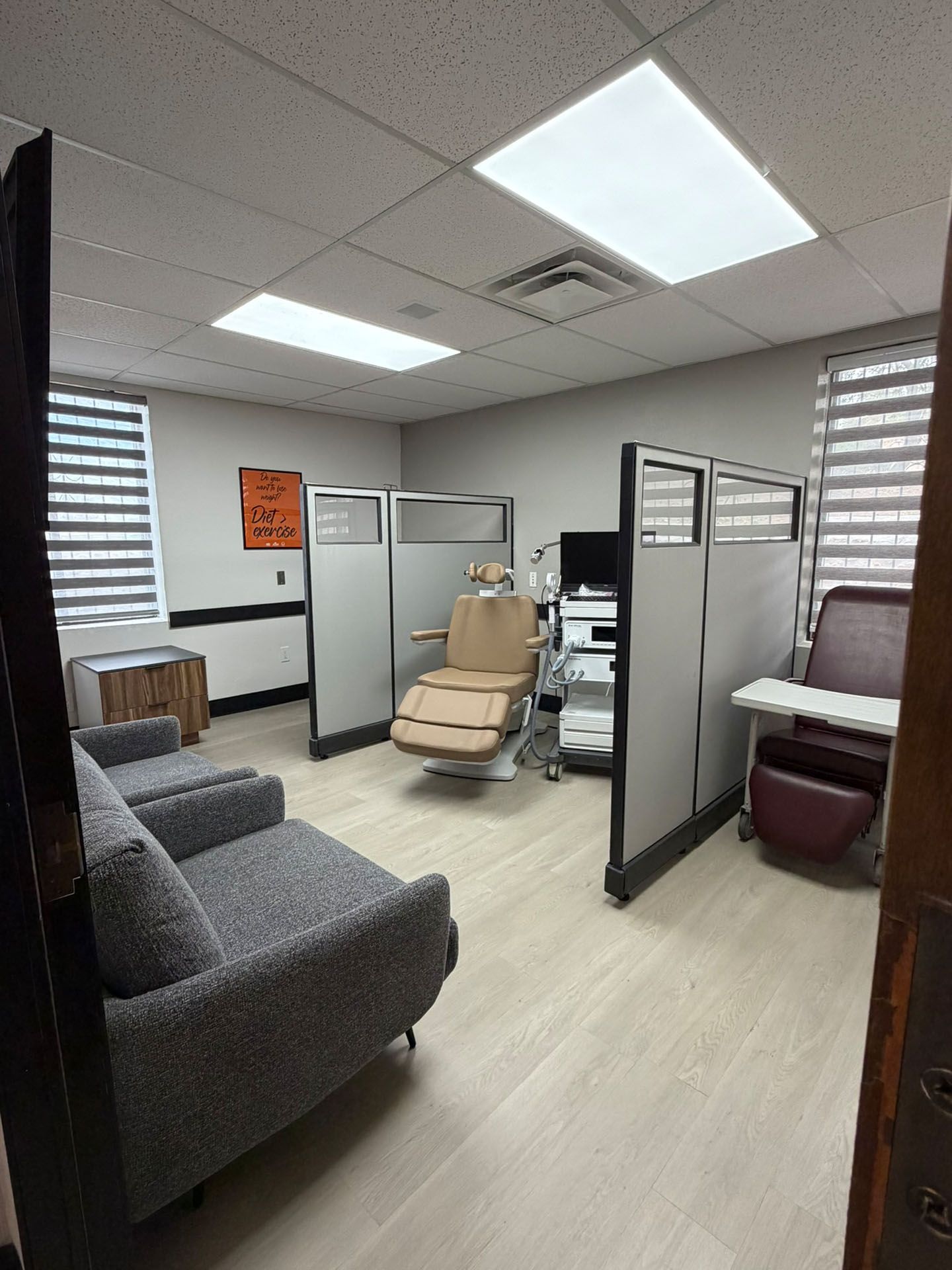
Most people describe TMS as a tapping or knocking sensation on the head, along with a clicking sound each time the coil pulses. You sit in a treatment chair, fully awake, while the coil rests against your scalp.
Here is what a typical visit looks like:
- You settle into the treatment chair. You may be asked to remove metal items such as earrings or hair clips.
- The coil is positioned over the brain region identified in your treatment plan.
- Stimulation begins. You will feel the tapping and may notice your scalp, jaw, or face muscles twitch.
- The session ends. Sessions at our clinic typically last 20 to 40 minutes, depending on your plan.
- You get up and go back to your day. There is no recovery period.
Because there is no anesthesia or sedation, you can drive yourself home, go back to work, or pick up your kids after a session. For many patients in El Paso and across the border region, that matters. A course of TMS typically means five visits a week for several weeks, so fitting treatment into a normal routine makes the full course more realistic to complete.
Are There Long-Term Side Effects of TMS?
According to NIMH, most TMS side effects appear to be mild and short-term, and memory loss is not among the side effects it lists for TMS. That stands in contrast to ECT, where NIMH notes some patients experience memory loss around the time of treatment.
NIMH is also clear that long-term side effects of TMS have not been fully determined and that more research is needed. We think that honesty is important. TMS has been FDA-cleared for depression since 2008 and has a long track record in psychiatric care, but no treatment is without unknowns. Your provider will talk with you about how TMS fits with what is known, what you have already tried, and what matters most to you.
If you are still sorting out whether your situation counts as treatment-resistant depression, our guide on
what to do when antidepressants are not working walks through the next-step options. For a side-by-side look at two common paths, see
TMS vs. SPRAVATO® in El Paso.
Talk Through Your Questions About TMS With Our El Paso Team
Every TMS decision at MindBliss Psychiatry starts with a comprehensive psychiatric evaluation. We review your symptoms, past treatments, medical history, and safety considerations, then talk honestly about whether TMS is a good fit. Our office is at 1201 East Schuster Suite 1A, and we care for adults across El Paso County and Doña Ana County, New Mexico.
If you want a clear, judgment-free conversation about TMS and its side effects, call us at
915-505-9713, text 915-229-5033, or
schedule a TMS consultation.
TMS Side Effects FAQ
Is TMS therapy painful?
TMS is generally well tolerated. Most patients describe the sensation as tapping or pulsing on the scalp rather than pain. Some feel discomfort at the treatment site, especially early in a course, and it typically lessens as sessions continue. Tell your care team if anything feels too strong.
Can I keep taking my medications during TMS?
Often, yes. Many patients continue their medications during TMS. Your provider will review everything you take, since some medications affect seizure risk, and will guide you based on your individual plan. Do not stop or change a medication on your own.
Can TMS make depression worse?
Worsening depression is not among the common side effects NIMH lists for TMS, but any change in mood during treatment is worth reporting right away. Your care team tracks how you are feeling throughout your course so the plan can be adjusted if needed.
Is TMS used for OCD as well as depression?
Yes. In 2018, the FDA cleared TMS for people with OCD who have not responded to traditional treatments. You can read more in our article on TMS for OCD in El Paso.
Our Services
Conditions We Support
- Depression (TRD)
- Anxiety (GAD)
- OCD
- Bipolar Disorder
- Sleep Disorders
- PTSD & Trauma
- Concussion Recovery
- ADD & ADHD
- Chronic Pain
- Eating Disorders
- Stroke Recovery
- Epilepsy
- Parkinson's
- Migraines
Find Help in El Paso
If you're facing symptoms that disrupt your daily life, the team at MindBliss Psychiatry is here to help you regain balance and clarity. Reach out for assistance today!
Text 915-229-5033 to book
Recent Articles